
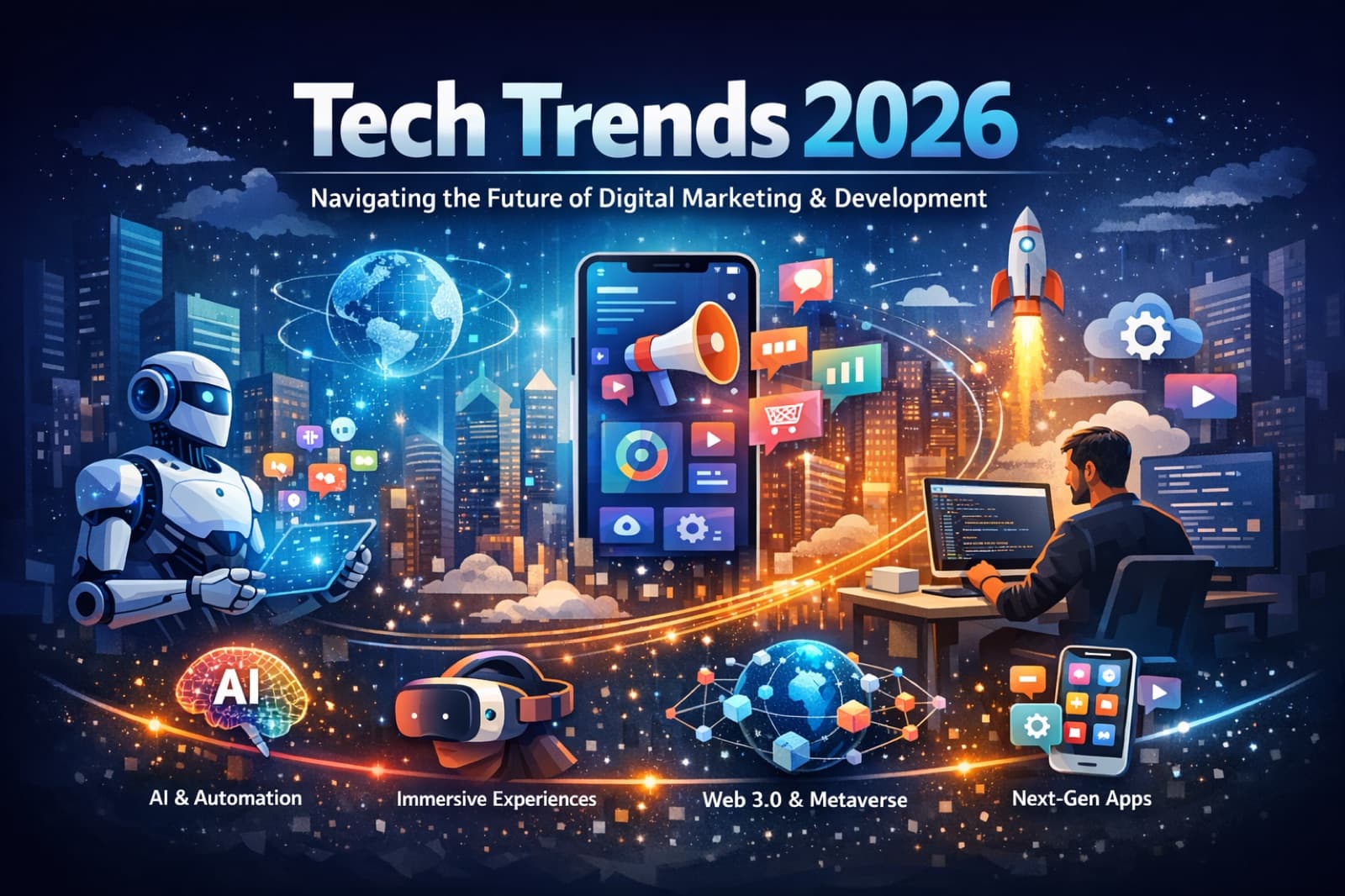
As 2026 approaches, technology is reshaping how brands connect with audiences and how digital products are built, experienced, and scaled. Digital marketing, web development, and app development are no longer separate functions—they are deeply interconnected parts of a single digital ecosystem.
This blog examines the most significant tech trends of 2026, with a clear focus on digital marketing, website development, and application development, enabling businesses and creators to understand where the digital world is heading.
1. Artificial Intelligence Redefines Digital Marketing
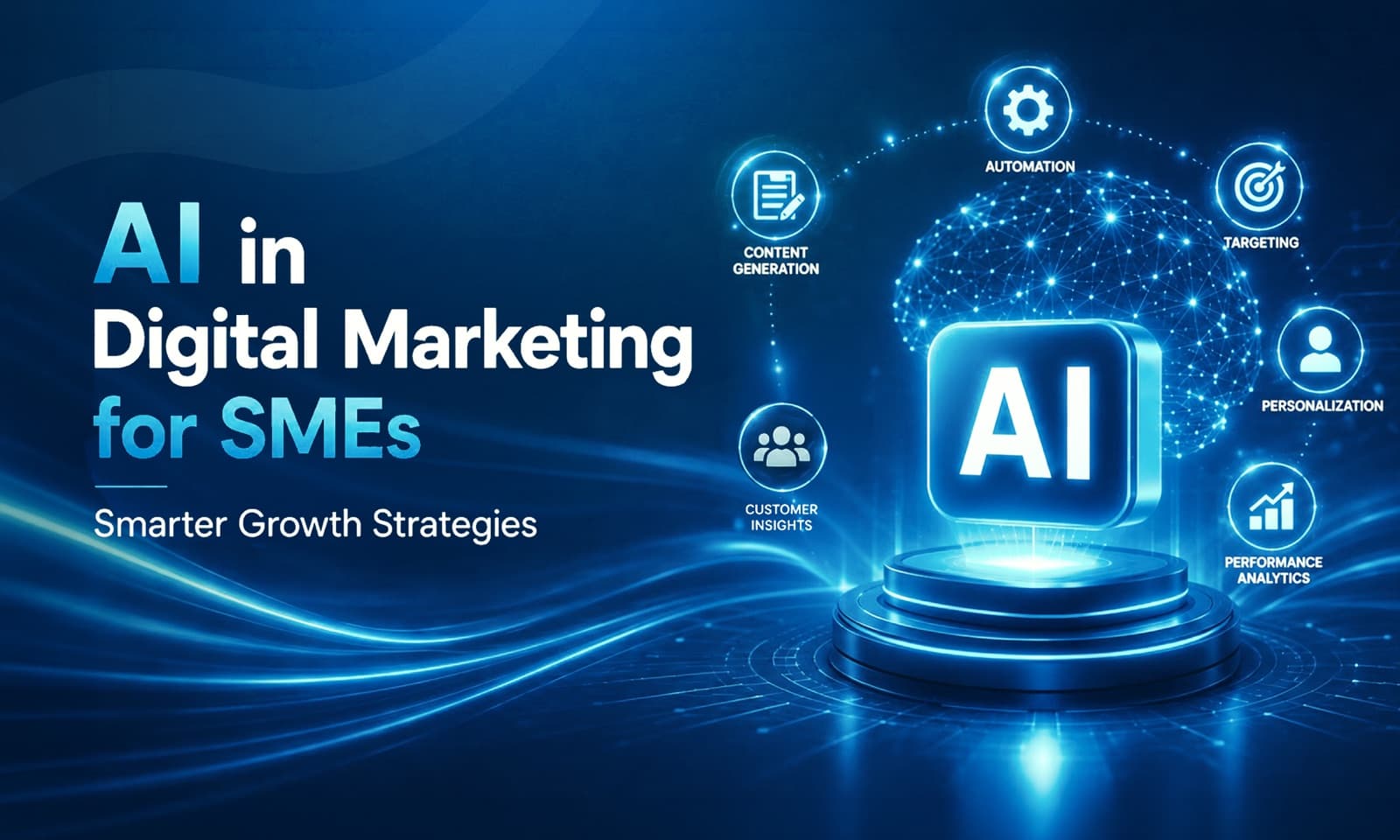
In 2026, Artificial Intelligence plays a central role in planning, executing, and optimizing marketing campaigns. AI helps marketers understand user intent, behavior patterns, and content performance with greater accuracy.
Key impacts include:
- Smarter audience targeting
- Personalized content experiences
- Improved campaign performance analysis
Marketing becomes more data-informed while still requiring human creativity and strategy.
2. Generative AI Transforms Content Creation
Generative AI is changing how content is produced for websites, apps, and marketing platforms. From written content to visuals and videos, creation becomes faster and more adaptive.
In digital marketing and development, this enables:
- Rapid content drafts and updates
- Scalable website and app content
- Faster design and prototyping cycles
This trend supports speed without sacrificing consistency.
3. Smarter, Performance-Driven Websites
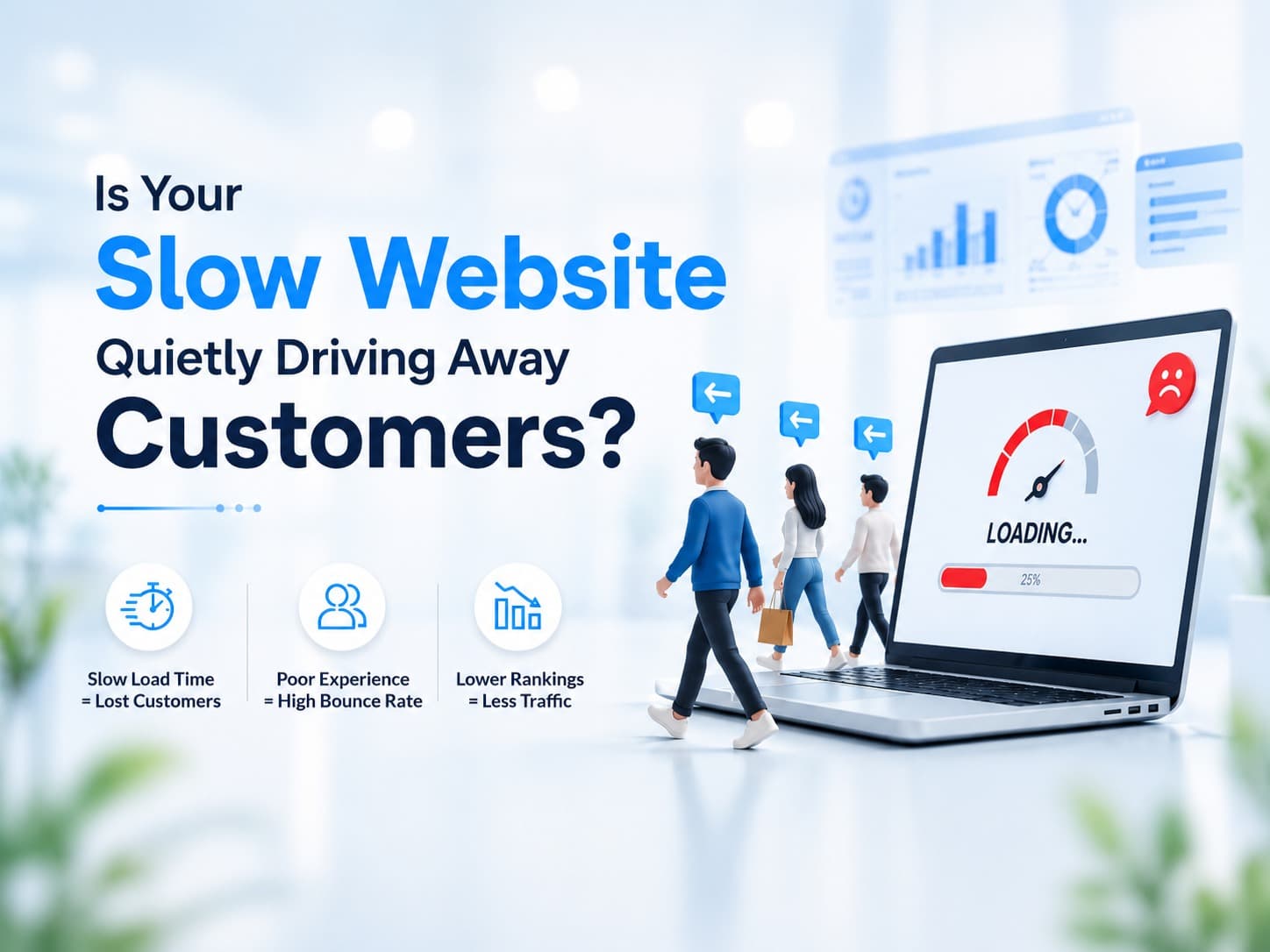
Web development in 2026 focuses on performance, accessibility, and user experience. Websites are expected to load faster, adapt to user behavior, and perform seamlessly across devices.
Key trends include:
- Mobile-first and responsive design
- Progressive web applications
- Optimized site performance and security
A well-built website becomes the foundation of all digital marketing efforts.
4. App Development Becomes More User-Centric
Modern apps are designed around real user needs. In 2026, app development prioritizes simplicity, speed, and personalization.
Notable developments include:
- AI-powered personalization
- Cross-platform app development
- Continuous performance optimization
Apps are no longer just tools—they are ongoing digital experiences.
5. Connected Data Across Marketing, Web & Apps
One of the biggest shifts in 2026 is the integration of data across digital touchpoints. Websites, apps, and marketing platforms share insights to create unified user journeys.
Benefits include:
- Better customer understanding
- Consistent brand experiences
- Improved decision-making
Data-driven alignment helps businesses scale effectively.
6. Privacy-First and Secure Digital Experiences
With increasing awareness of data privacy, digital platforms in 2026 are built with security and transparency in mind.
Key focus areas:
- Secure data handling
- Clear user consent practices
- Safer application architecture
Trust becomes essential for long-term user engagement.
7. Human-Centered Design Across Platforms
Design trends in 2026 focus on clarity, accessibility, and ease of use. Whether it’s a marketing landing page or a mobile app, human-centered design drives success.
This includes:
- Simple navigation
- Inclusive design standards
- Reduced user friction
Good design improves both conversions and retention.
8. Automation Improves Development & Marketing Workflows
Automation tools help teams work faster and more efficiently. In digital marketing and development, automation reduces repetitive tasks.
Examples include:
- Automated testing and deployment
- Campaign optimization workflows
- Content scheduling and performance tracking
Automation allows teams to focus on strategy and creativity.
9. No-Code and Low-Code Tools Gain Popularity
No-code and low-code platforms empower marketers and non-technical teams to build pages, apps, and workflows quickly.
Advantages include:
- Faster execution
- Lower development costs
- Increased collaboration between teams
These tools support rapid innovation.
10. Ethical and Responsible Digital Innovation
As digital influence grows, ethical responsibility becomes critical. In 2026, businesses are expected to build digital products that are transparent, fair, and user-focused.
This means:
- Responsible use of AI
- Honest digital communication
- Respect for user data
Responsible innovation strengthens long-term digital success.
How Businesses Can Prepare for 2026
As technology evolves, preparation is more important than prediction. Businesses working in digital marketing, web development, and app development can stay future-ready by focusing on a few practical steps.
Start by strengthening digital foundations. High-performing websites, scalable applications, and consistent brand experiences across platforms will remain essential. Investing in performance, security, and user experience today reduces friction tomorrow.
Next, use technology to understand users better. Data from websites, apps, and campaigns should work together to reveal real behavior patterns, helping teams create more relevant content and features.
Automation should be adopted thoughtfully. Automating repetitive tasks in marketing and development improves efficiency, but creativity, strategy, and problem-solving should always remain human-led.
Finally, prioritize trust. Transparent communication, responsible data use, and reliable digital products will build long-term relationships with users.
Conclusion
Tech trends in 2026 show a clear direction for digital marketing, web development, and app development. Intelligent automation, better design, connected data, and user trust are shaping the next generation of digital experiences.
Businesses that adapt early and focus on meaningful digital experiences will be better prepared to grow, compete, and innovate in the years ahead.